
How to transit from HKIA without passing Hong Kong Immigration – and back again
This post is a continuation from my previous post about the BA A350 flight from London Heathrow to Hong Kong.
I had looked up a few weeks before my trip, what the easiest way to get to Macao from HKIA was – and saw that there was a very convenient bus that takes you over a very long bridge. The bus system is set up so that you don’t need to pass immigration in HK and can transfer our to Macao using the SkyBridge area of HKIA – the immigration is only then when you arrive in Macao – a much easier way of doing things!
I registered with the website, and paid for the bus ticket – which was promptly refunded as Macao is currently offering this bus and immigration service for free… amazing! Here are some of the instructions sent to me via confirming the ticket:
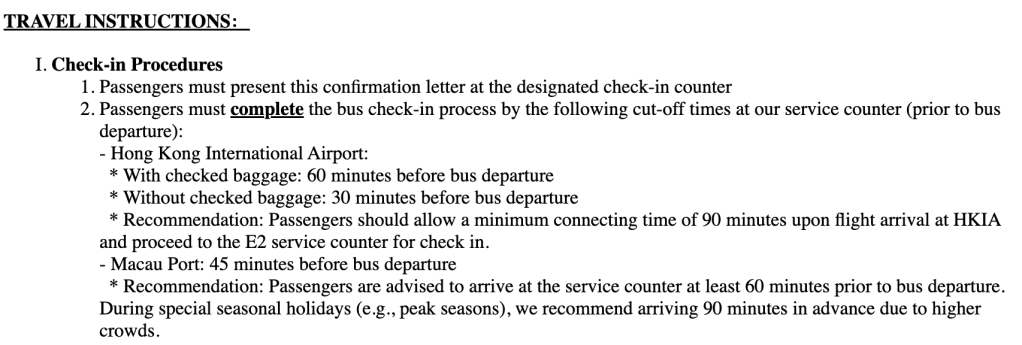
All I had to do was show up at the Bus Transfer desk in Transfer area E2 by following signs to this area, located just before passport control. From my arrival gate this was clearly marked and very easy to find (Thanks HKIA).
I presented my passport, was given a ticket, and was told that someone would collect my baggage from the carousel, bring it with them to the bus, and I just had to wait in the waiting area until closer to the bus departure time as I’d missed the 15:15 bus by about two minutes – frustrating!
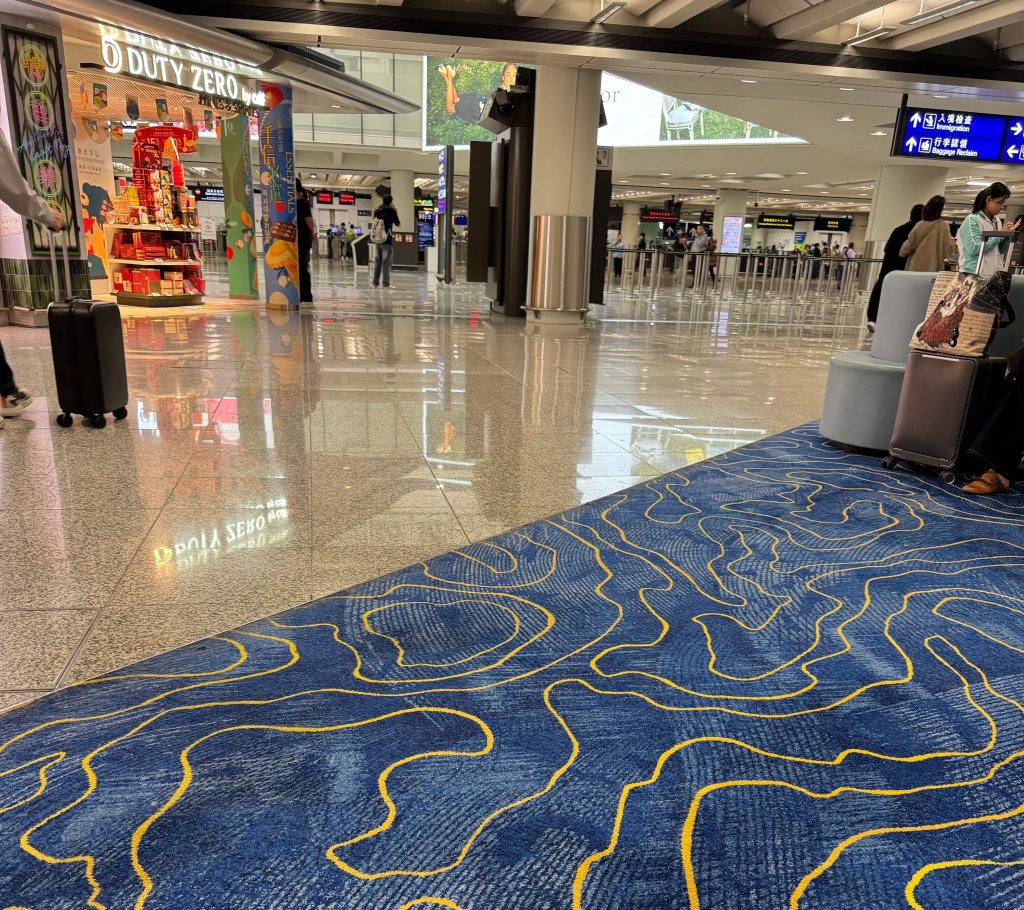
The small area to wait in was carpeted much like Singapore Changi airport – psychedelic and fun! Unfortunately the USB-A chargers built into seats here were not working. I spent a little time catching up with friends and family on my phone – although it was only 6am UK time. There wasn’t much to see around either, but I took a walk to stretch my legs. and make the time pass more quickly. The immigration counters were also not busy at all at this time.
At bang-on 16:00 we were called forwards to go into the SkyPier – which involved scanning the ticket and passport and then proceeding down some escalators to the transit area, which would take us out of the main airport and to the SkyPier terminal. Some buses to Mainland China also took the same route, as well as to Macao.
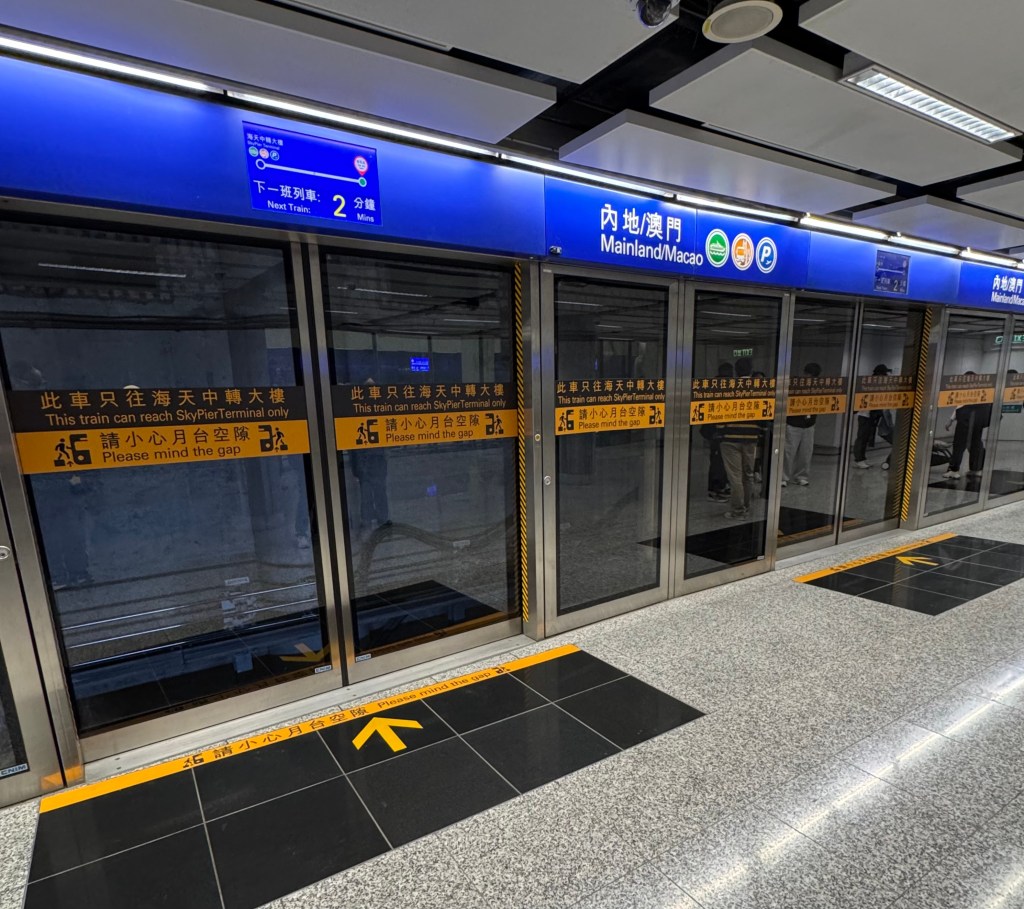
There was a short wait for the SkyPier transfer, which took us to a separate area in another terminal at HKIA, the SkyPier itself. This has facilities for a large number of people to take different buses and coaches out to China and Macao.
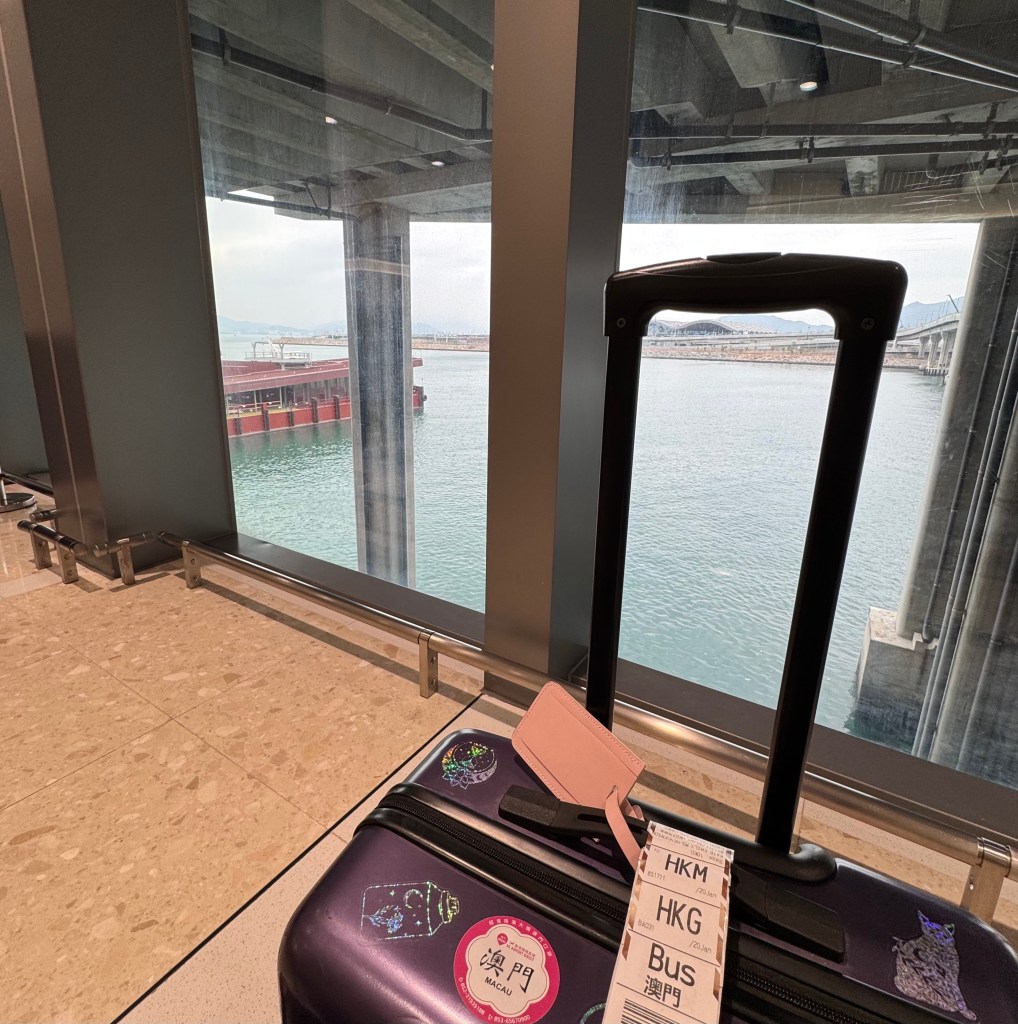
At this point, I collected my checked-in luggage from the SkyPier carousel – which appeared there magically, and with a new tag on – I did not have to do anything! The staff must have collected this from the main luggage carousel and then directed it here somehow – or perhaps it was automated? I’m not sure – it was nice to see it had safely made it from London though!
I waited around 15 minutes for the bus to be ready and then we all boarded. Although it was a fairly small coach, there was plenty of space – with around 1 person per 2 seats (other than families sat together). Most people on the bus were not tourists!
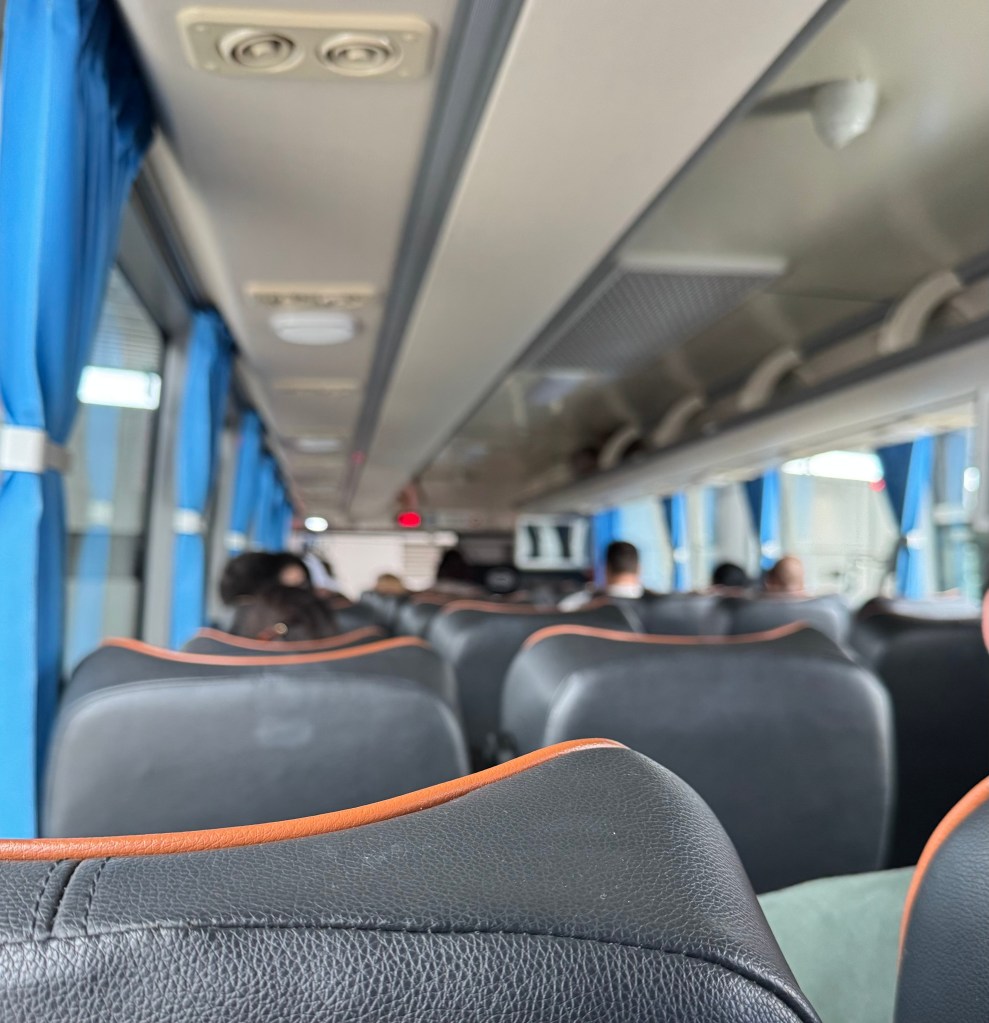
We left dead on time at 16:30 and made our way around the windy roads of the boundary crossing facilities, to access the HK-Zhuhai-Macao bridge (HZMB) – a bit of an architectural wonder!
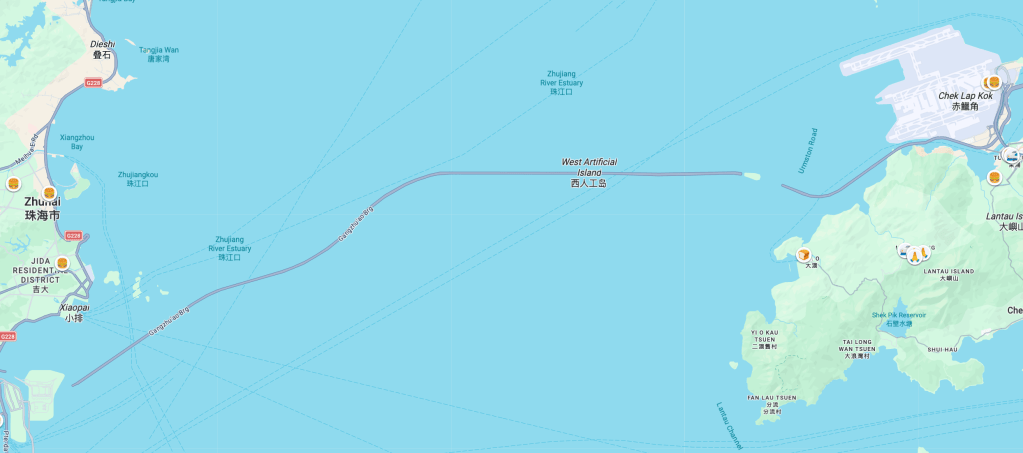
This bridge is 34 miles long, and is currently the longest sea crossing in the world! It features various artificial islands, bridge sections, tunnel sections, and really amazing views. Lots more facts and information are on its Wikipedia Page, but it really is an engineering marvel!
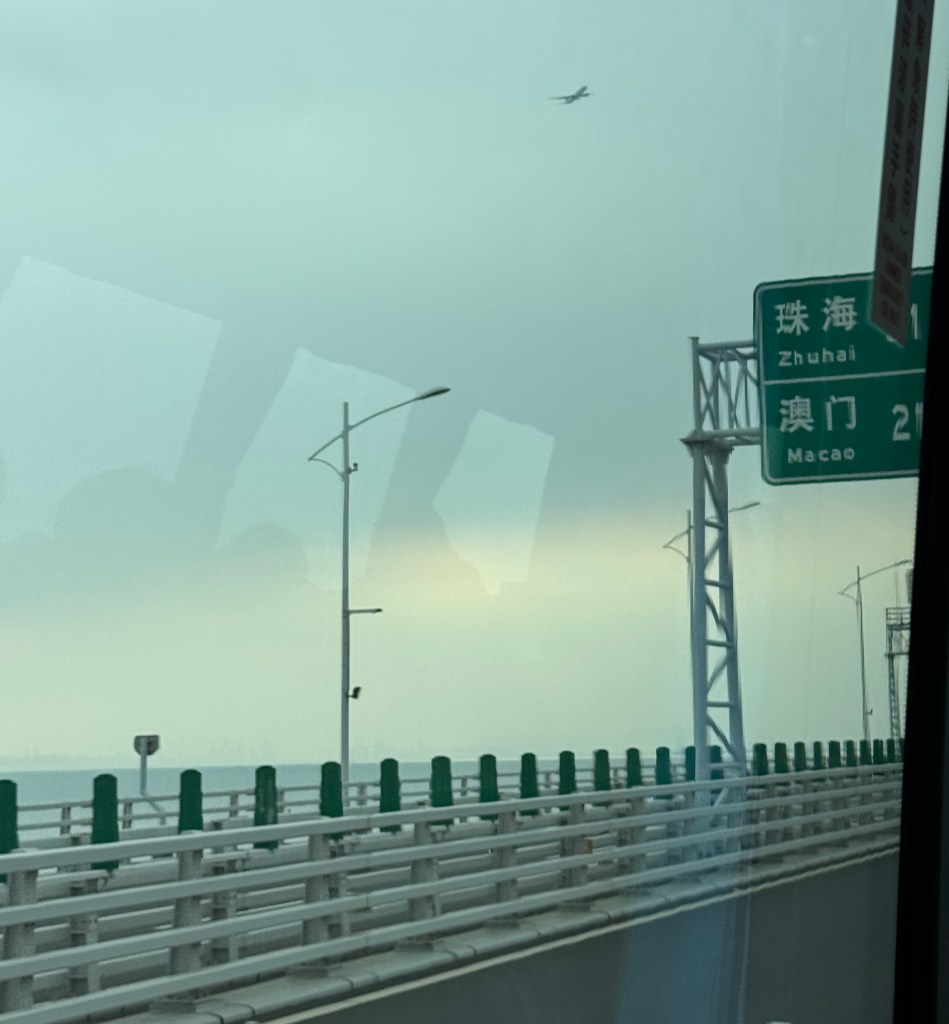
The weather was getting greyer and hazy – and after around 30 mins on the bridge and tunnels, the skyscrapers of Macao came into view!
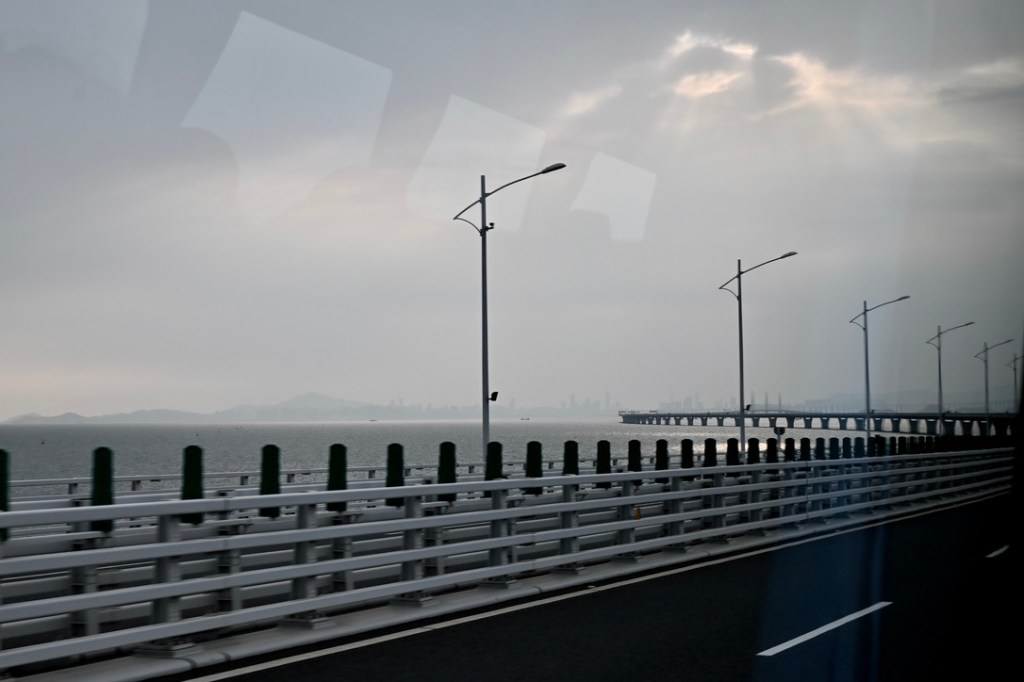
The coach then reached the boundary facilities in Macao, where we all passed through a large building, reunited with luggage, passed through immigration very quickly and then out into transit facilities.
By this point it was starting to get dark. I had withdrawn a few Macanese Patacas at the ATM to pay for items in Macao, and had looked at the local bus times – it was due to take over an hour and a half for a bus to get me to the hotel I had booked, and the bus was coming in 30 minutes – so I took a taxi, which only took around 15 minutes, and was absolutely worth it for around £10 only including a 20% tip!
I booked a room at the Artyzen Grand Lapa hotel – it is situated in more of a local area, but closer to casinos than to the historic areas of the island. I checked in, plopped my bags down, and took a 10 min rest on the bed to reset and relax – this was the first time I had stopped travelling for a rather large number of hours.
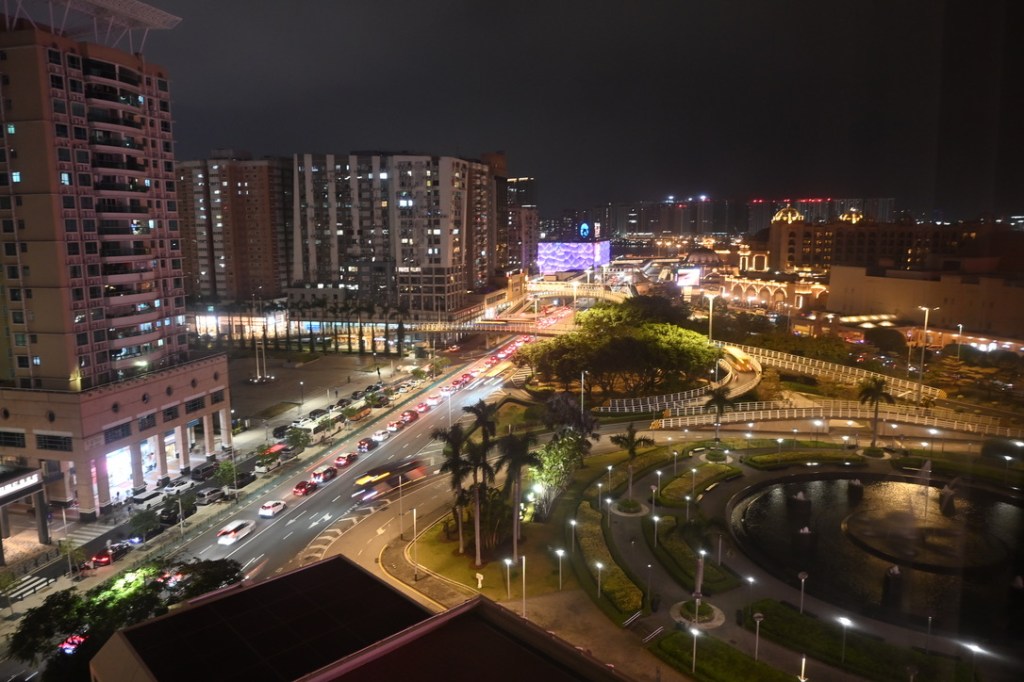
By this point it was reaching 18:30 local time, and I really only had a few hours to wander around the city and explore. I booked a flight out of HKIA at 13:30 the next day, but hadn’t really understood how long the bus and immigration process would take – so I planned to be out of the hotel at 8am the next morning to get to HKIA at around 10:30, in plenty of time for my departure.
That only left one evening in Macao to explore – so I better get my skates on.
Looking at a map, Macao looks tiny. However, it really isn’t.
The region is made of three areas – Macao Peninsula, Taipa, and Coloane, which are connected by large road bridges over the sea between them. In recent years, land has been reclaimed from the sea between Taipa and Coloane islands, and called Cotai – this recent development has a huge strip, potentially akin to Las Vegas, with many casinos and entertainment venues in the area. Historically, Macao was a Portuguese colony, established in the late 1550s, and became a Special Administrative Region of China (like Hong Kong) in 1999.
I was very intrigued by the mix of Portuguese, European and Chinese heritage so wanted to look around and get a feel for the place. Most tourists come here from China and the main attractions are the huge mega-casinos and resorts, I am not a gambling person so am less interested in the casino side – more in the what life is like there side!
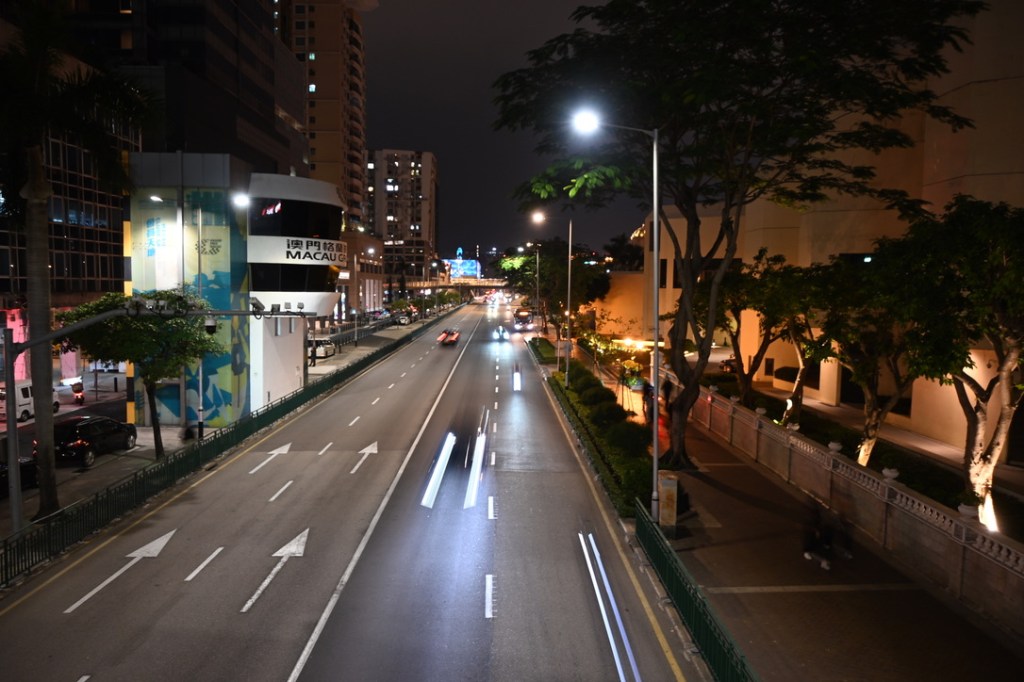
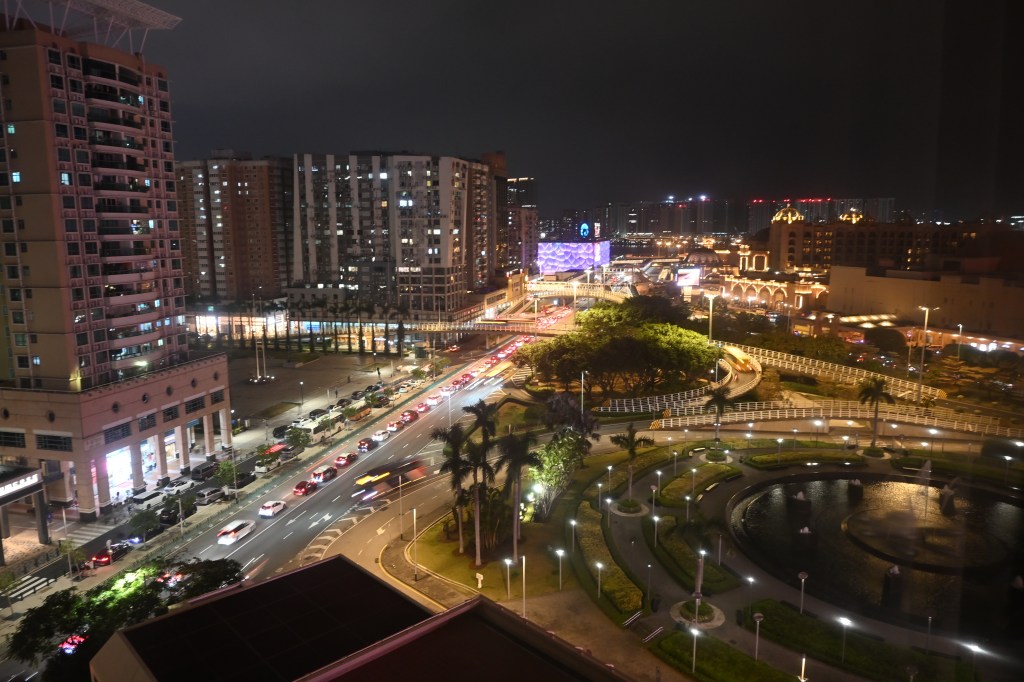
The main road I was staying on is also host of the Macao Grand Prix – a street circuit used for various formulae of racing across motorbikes and supercars! The finishing straight is this part of the road – the white and black building on the left of the road is where the winners park their vehicles!
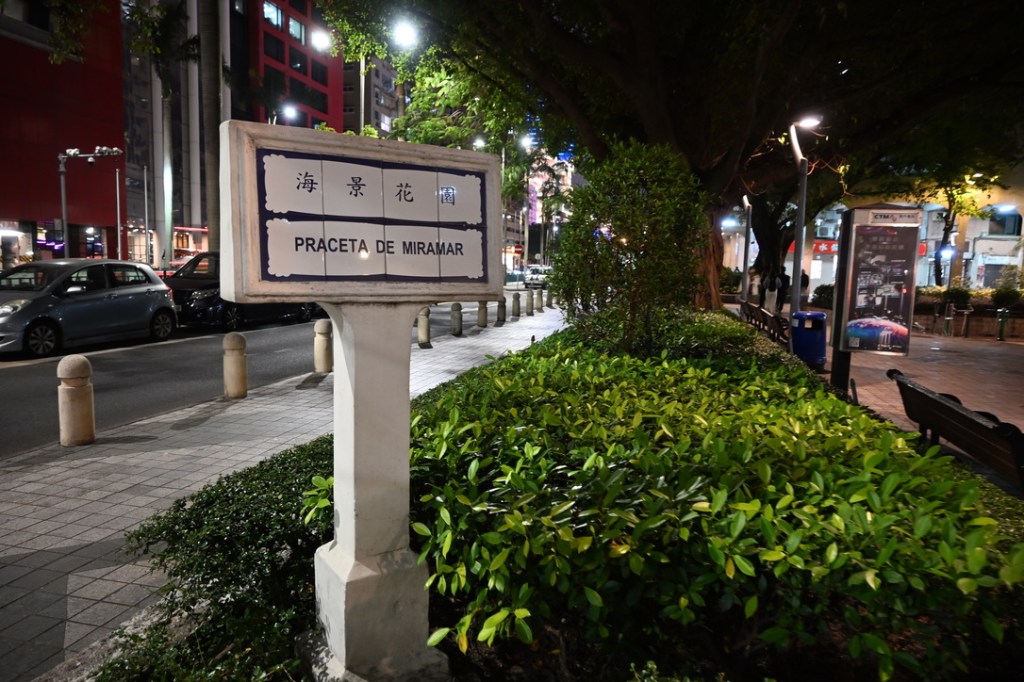
The mix of Portuguese and European culture along with Chinese culture is really, really interesting and comes across everywhere, even in street furniture and architecture. I enjoyed the little parks, wide avenues, and lush green planting.
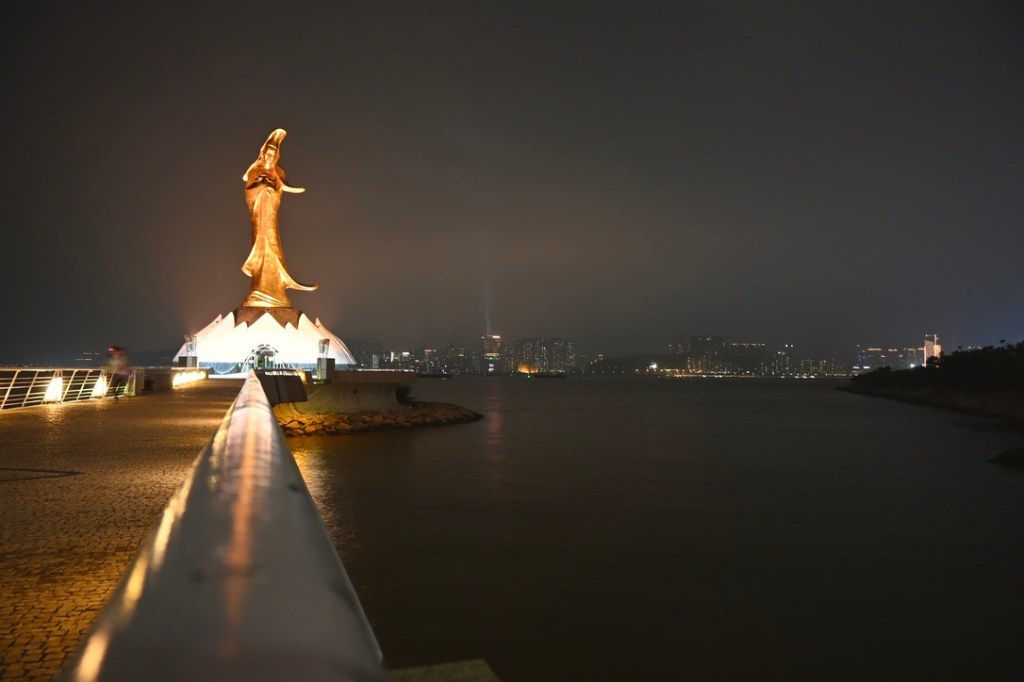
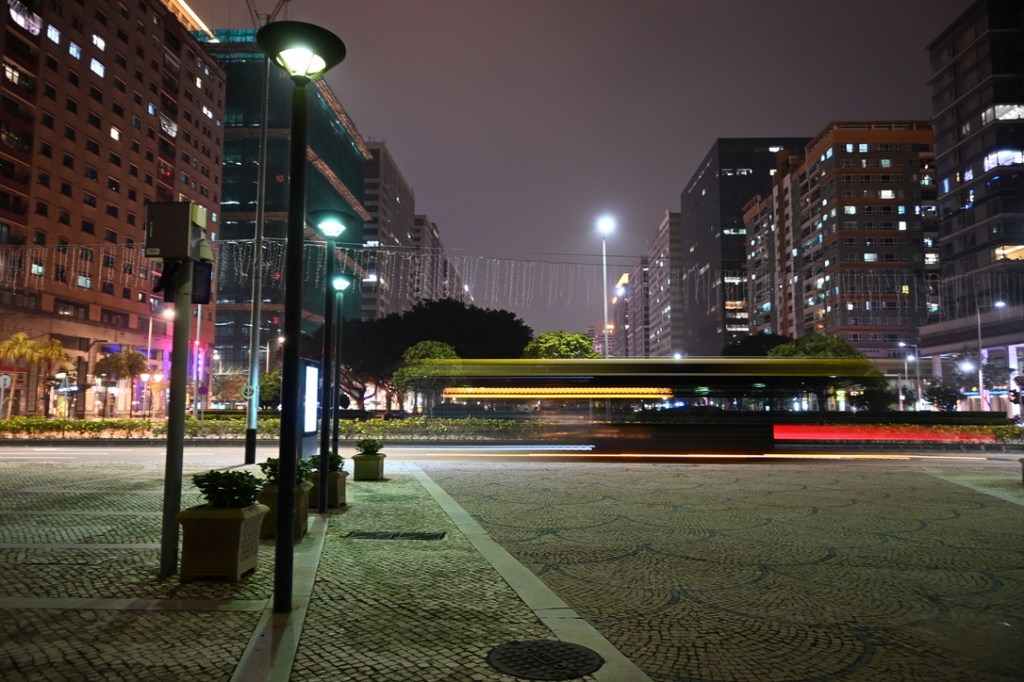
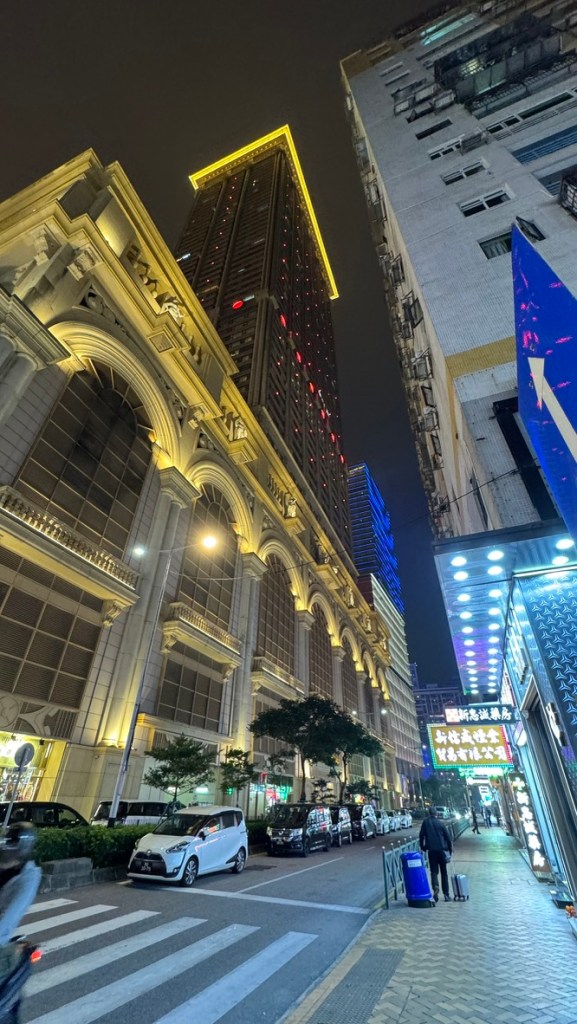
I was very desperate to find a bakery selling Pasteis de Nata, however as it was late in the evening, most bakeries were closed, or had sold out for the day.
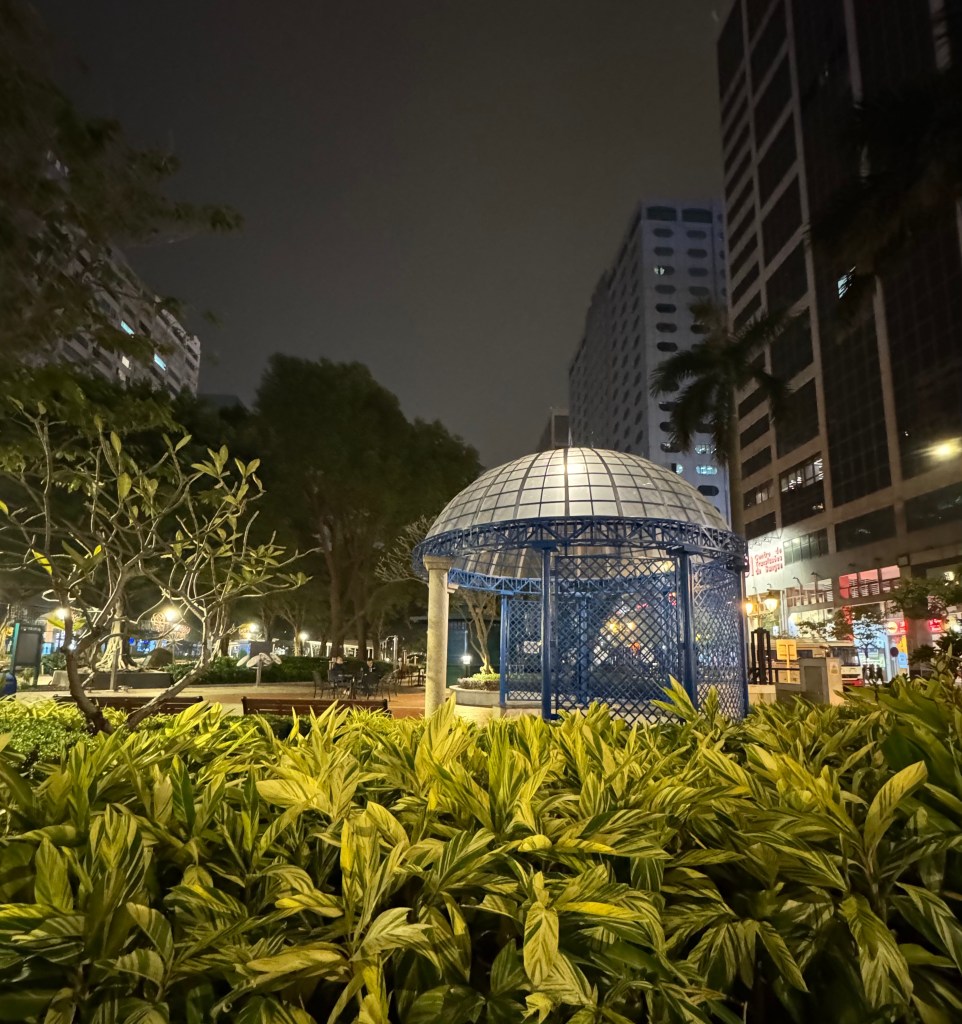
The scents of walking around this area were so intriguing… deep broth flavours, meaty barbecue scents, grilled vegetables and skewers on the street, and beautiful scents from the bushes and trees mixed in with the sweetness of buns, fresh bakery goods, pineapple tarts and tea.
It was so heady and a treat for the senses just to wander around and sniff the air – and sample things from local shops!
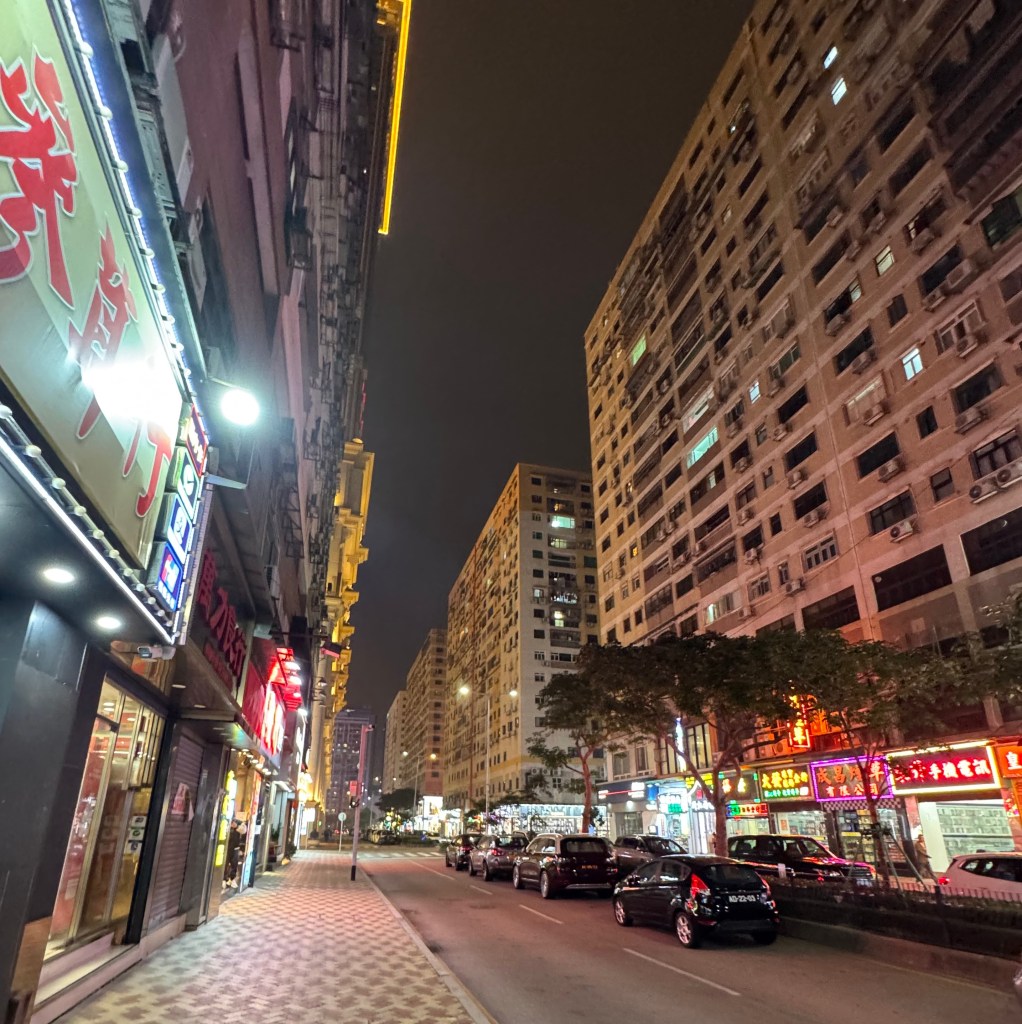
This wander for around 2-3 hours was taking me through the southern area of Macao peninsula – most roads south of the Avenida do Dr Rodrigo Rodriguez. So, I did not have time this time, to even visit the tip of the historical area, up the hill and North on the peninsula. This was also disappointing – as I had thought that one afternoon and evening might have been plenty of time to discover Macao – but it definitely wasn’t anything near enough with the few hours I had in the evening.
Oh well – it just means I need to return to find out what these areas are like – and probably stay closer to there next time, too.
Back to the hotel for sleep it was, and then the reverse journey in the morning with a taxi from the hotel to Macao immigration, along the HZMB and back to the Airport for my next flight in this trip, detailed in this post.


Leave a comment